Where Understanding Comes Before Treatment.
If your pain keeps returning — despite treatment, despite rest, despite everything you have tried — the reason is rarely that treatment failed. More often, the cause was never properly identified in the first place. The ROOT Method by Dr. Umer begins with the question most clinical approaches never ask: Why does this pain exist? Not where. Why.
Patient history, movement assessment, physical examination, and functional analysis are used to build a complete clinical picture before any treatment decision is made. Treatment follows the cause — not the symptom. The ROOT Method by Dr. Umer is not simply a treatment. It is a way of thinking.
Over more than two decades of clinical practice, a single pattern repeated itself: patients arriving after months or years of treatment, still searching for lasting relief. Not because care had been withheld — but because the question being asked was incomplete.
Many patients who attend this clinic have already received multiple forms of care — followed clinical advice, completed treatment courses, taken medication. For a time, some experienced relief. But the pain returned — sometimes in a different form, sometimes in the same location. This recurring pattern pointed to one clinical reality: when treatment targets the symptom without identifying its source, the underlying problem often remains unresolved.
The most important question in pain care is not "where does it hurt?" — it is "why does it hurt there?" Decisions made without answering this may provide temporary relief. But without identifying the true pain generator — the specific structure, movement fault, or mechanical dysfunction — lasting improvement becomes difficult to achieve. The ROOT Method by Dr. Umer was built around this question.
No two patients present identically, even when sharing the same diagnosis. A label — "disc bulge" or "muscle strain" — describes what appears on a scan. It does not explain what is generating the pain in that specific individual. Every patient deserves a structured assessment of their unique history, movement patterns, and physical findings before any treatment decision is made.
This is why the ROOT Method by Dr. Umer exists: to provide a structured, cause-first approach to pain care — one that begins not with a technique, but with a question. A system that treats reasoning as the first step of treatment, not an afterthought.
The answer to that question is the ROOT Method by Dr. Umer.
The ROOT Method by Dr. Umer is a structured clinical reasoning and treatment system. It is designed to identify the true source of pain — not simply its location — before any treatment decision is made.
Pain is frequently experienced at a distance from its true source. Arm symptoms may originate in the cervical spine. Knee discomfort may stem from the hip or foot. This distinction matters clinically — treating the site of pain without addressing its origin often produces incomplete or temporary results.
Every patient presents differently, even with the same diagnosis. Imaging provides valuable structural information — but it is only one part of the clinical picture. History, movement quality, physical examination, and functional testing carry equal weight. Within the ROOT Method by Dr. Umer, treatment is never selected first. It is selected last — after the full clinical picture has been established.
Identify what is truly generating the pain, not simply where it is felt. The clinical assessment begins by gathering a detailed history of the patient's symptoms, onset, and behaviour.
Assess posture, movement patterns, functional capacity, and biomechanics. Observation reveals what imaging alone cannot — how the body is actually moving and where mechanical breakdown is occurring.
Correlate all clinical findings to determine the most likely source of pain. This is the diagnostic reasoning step — where history, examination, and movement data are synthesised into a clear clinical conclusion.
Deliver an individualized treatment plan aimed at restoring movement and function at the identified source. No two treatment plans are identical, because no two patients present identically.
The next step is understanding how the ROOT Method by Dr. Umer is applied during every patient consultation.
From first consultation to treatment plan — here is exactly what happens during a ROOT Method by Dr. Umer assessment.
Understand the patient's complete history — symptoms, onset, lifestyle, previous treatments, imaging results, and personal goals. Nothing is considered irrelevant at this stage.
Perform a detailed movement assessment, postural analysis, joint examination, muscle testing, and functional evaluation. The body is observed in motion, not only at rest.
Compare the patient's history, examination findings, and any available imaging to identify the most likely pain generator. Imaging is interpreted alongside clinical findings — never in isolation.
Develop an individualized treatment strategy based entirely on the patient's unique clinical presentation. No two patients receive exactly the same plan, because no two patients present identically.
Treatment focuses on reducing pain, improving movement, and restoring function — helping patients return confidently to their daily activities with a clearly understood clinical rationale.
The assessment framework applied within the ROOT Method by Dr. Umer is consistent for every patient. What changes is the conclusion it produces. Because each patient's history, movement patterns, and physical findings differ, the treatment strategy developed at the end of this process is always specific to the individual — never a fixed protocol applied uniformly.
The ROOT Method by Dr. Umer is designed to assess and address mechanical dysfunctions that contribute to pain, reduced movement, and impaired function. The conditions below are among those commonly managed through this approach.
Neck pain frequently involves a combination of joint restriction, muscle dysfunction, and postural loading patterns. Assessment evaluates the cervical spine, surrounding musculature, and thoracic mechanics to identify the specific contributing factors.
Mechanical back pain can originate from the lumbar spine, sacroiliac joints, or surrounding soft tissue structures. Clinical reasoning determines which structures are involved and how movement patterns are contributing to the presentation.
Sciatica describes pain that travels along the sciatic nerve pathway, typically into the buttock, leg, or foot. Assessment identifies the level and mechanism of neural irritation — whether from disc, joint, or soft tissue.
Lumbar disc problems vary in severity and presentation, and not all require surgical intervention. Neurological signs, movement capacity, and functional tolerance are assessed to determine an appropriate management pathway.
Frozen shoulder involves a progressive restriction of shoulder movement, often with significant pain in the early stages. Assessment evaluates the degree of restriction, tissue involvement, and stage of the condition to guide management.
Knee pain is commonly driven by altered mechanics at the hip, foot, or within the knee joint itself. Clinical assessment examines loading patterns, movement quality, and tissue involvement to identify the primary contributing factors.
Hip pain may originate from the joint, surrounding musculature, or be referred from the lumbar spine. Differentiating the true source is a key focus of the assessment before any treatment is introduced.
Shoulder pain often involves an interaction between the rotator cuff, scapular mechanics, and thoracic posture. Assessment addresses the full kinetic chain rather than focusing solely on the site of symptoms.
Cervicogenic headaches originate from structures within the cervical spine, most commonly the upper three cervical segments. Clinical assessment determines whether the cervical spine is a contributing source before treatment is considered.
Muscle spasm is frequently a secondary response to underlying joint restriction or mechanical dysfunction. Identifying and addressing the primary driver often reduces spasm more effectively than treating the muscle in isolation.
Sports injuries commonly involve both tissue damage and movement dysfunction that, if unaddressed, can contribute to recurrence. Assessment evaluates the injured structure and the biomechanical factors that may have preceded or accompanied the injury.
Poor posture is rarely an isolated finding — it typically reflects underlying muscular imbalances, joint restrictions, or habitual movement patterns. Assessment identifies the specific contributors rather than providing generalised advice.
Joint stiffness can result from immobility, injury, or degenerative change, and often carries a functional impact beyond the affected joint. Assessment examines the nature and extent of restriction and its effect on overall movement.
Chronic mechanical pain has persisted beyond the expected healing timeframe and often involves multiple contributing factors. The ROOT Method by Dr. Umer approaches these presentations with a structured reassessment rather than repeating previous treatment patterns.
Movement dysfunction describes a breakdown in the normal coordination and quality of movement patterns. When identified and addressed clinically, it can reduce the mechanical load that contributes to ongoing pain.
Some patients require referral for further medical evaluation before treatment can begin. The ROOT Method by Dr. Umer prioritises appropriate clinical triage — ensuring that the right care pathway is identified for every individual.
Patient safety always comes before treatment.
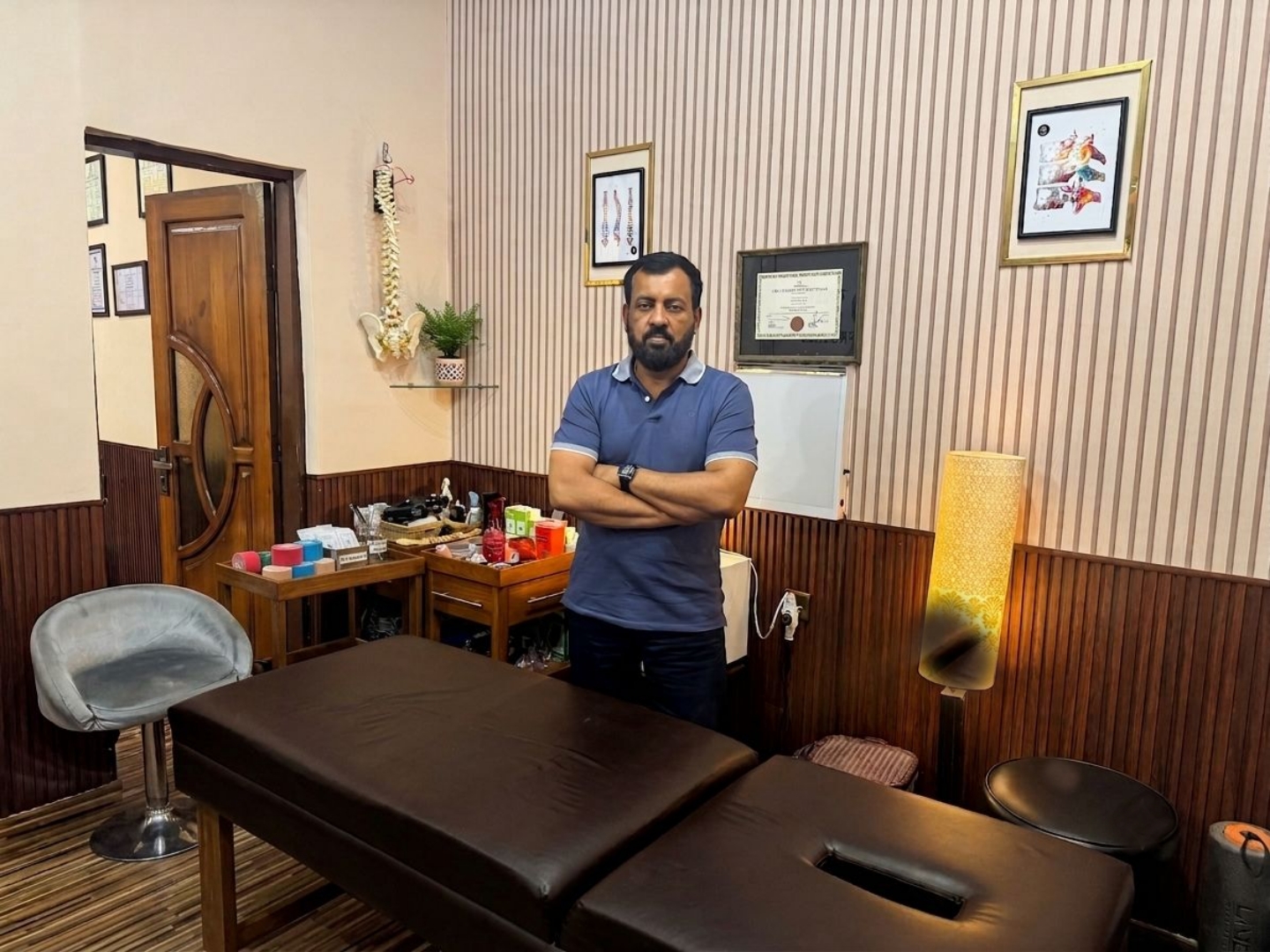
The ROOT Method by Dr. Umer is grounded in established principles from modern musculoskeletal science — biomechanics, pain science, movement analysis, and clinical reasoning — the disciplines that form the foundation of evidence-informed practice.
These principles are well-recognised across physiotherapy, manual therapy, and rehabilitation. What defines the ROOT Method by Dr. Umer is how they are applied together — systematically and individually — in every patient consultation.
When joints fail to move correctly, or muscle imbalances alter how load is distributed through the body, certain structures become overworked. This excess mechanical load can irritate tissues and generate pain — even without a specific injury event. Understanding how a patient's body is loading and moving is central to understanding why pain has developed.
Pain is produced by the nervous system as a protective response — and its intensity does not always reflect the degree of tissue damage present. A scan showing significant structural change may produce no symptoms in one patient, while another with minimal findings experiences considerable pain. Clinical assessment helps interpret pain within the full context of the individual, rather than the scan result alone.
Imaging captures structure at a single point in time, at rest. Movement assessment observes how the body actually functions — revealing compensations, restrictions, and loading patterns that a scan cannot detect. Watching a patient move, bend, and perform functional tasks provides clinical information that is often essential to understanding the origin of their pain.
Effective clinical decisions require integrating multiple sources of information. Patient history, examination findings, movement analysis, and imaging each contribute one part of the clinical picture. Relying on any single source — including imaging alone — can lead to incomplete or misdirected treatment. Clinical reasoning brings all available information together to reach the most accurate understanding of each individual's condition.
The ROOT Method by Dr. Umer integrates established principles from musculoskeletal rehabilitation, manual therapy, biomechanics, and pain science. These principles guide the assessment and reasoning process — while treatment is always tailored to the individual patient's findings. The goal is not to apply a fixed system uniformly, but to use a consistent process to reach the most appropriate decision for each person.
These are the clinical values that guide every consultation — not marketing promises, but principles that shape how every patient is assessed and cared for.
No treatment decision is made until the most likely source of pain has been identified through structured clinical assessment. Understanding why pain exists is considered a necessary first step — not an optional one.
Two patients with the same diagnosis may have completely different clinical presentations. No two assessments follow the same path, and no two treatment plans are identical — because no two individuals are.
If clinical assessment suggests that a condition is unlikely to respond to the treatments available, patients are told clearly and referred to the appropriate professional. Honest communication is considered part of the duty of care.
Wherever clinically appropriate, non-surgical and evidence-informed management options are explored before invasive procedures are considered. The least interventional approach that addresses the underlying cause is always the preferred starting point.
Patients are helped to understand their condition, what is contributing to their pain, and what the treatment process involves. An informed patient is better equipped to participate in their own recovery and to make decisions about their care.
The aim is not only to reduce pain in the short term, but to restore movement, rebuild confidence, and return patients to the daily activities that matter to them. Functional recovery is considered an equal priority to symptom relief.
MRI and X-ray results are valuable clinical tools — and they are taken seriously. But they are always interpreted alongside the patient's history, physical examination, and movement assessment. A scan describes structure. It does not always explain the individual in front of you.
Over more than 24 years of clinical practice, Dr. Umer Fayyaz has worked with thousands of patients experiencing chronic and complex musculoskeletal pain. His special clinical interest lies in conditions where the source of pain has not been clearly established — patients who have often undergone multiple treatments without lasting resolution. It was through years of treating these patients that the foundations of the ROOT Method by Dr. Umer took shape.
The ROOT Method by Dr. Umer was not developed in a classroom — it was refined through clinical observation, patient outcomes, and a growing conviction that every patient deserves careful, structured assessment before treatment begins. Dr. Umer's approach is grounded in the belief that understanding a patient's condition completely is not a luxury — it is a clinical responsibility.
Extensive clinical experience across a wide range of musculoskeletal conditions, from acute injuries to long-standing chronic pain.
Developer of a structured clinical reasoning system built from years of patient assessment and outcome observation.
Practice grounded in established principles from biomechanics, pain science, manual therapy and modern musculoskeletal rehabilitation.
Every consultation begins with understanding why pain exists — not simply what it is called or where it is located.
No fixed protocols applied uniformly — each treatment plan is developed specifically around the individual patient's clinical findings.
Patients are helped to understand their condition clearly, enabling informed decisions and a more active role in their own recovery.
Dr. Umer believes that successful treatment begins with understanding the person — not just the pain. A label or a scan result is a starting point, not a conclusion. The individual sitting in front of you — their history, their movement, their daily life — is where the real clinical picture begins.
Answers to the questions patients most commonly ask before their first appointment.
Not an assumption. Not a repeated protocol. A proper clinical assessment.
Every patient's journey through the ROOT Method by Dr. Umer begins with one question: why does this pain exist? That question drives the entire assessment process — from the first conversation to the final treatment decision. Pain that has persisted, returned, or never been fully explained deserves careful clinical reasoning, not assumptions based on a scan result or a diagnosis made without thorough examination.
The goal is not only to reduce pain. It is to restore movement, rebuild confidence, and help patients return fully to the activities that define their daily life. Sometimes treatment is the right recommendation. Sometimes further investigation is needed first. And sometimes, the most honest and appropriate step is referral to another specialist. All of these outcomes are part of the ROOT Method by Dr. Umer.
If no one has ever explained why your pain exists — perhaps no one has yet been treating the real problem.
Every consultation at this clinic is focused on three things: listening carefully to your history, examining thoroughly, and recommending the most appropriate next step — whether that involves treatment, further investigation, or referral. Your assessment will always be honest.